
What Is FOH in Music?

FOH stands for Front of House — the main audio mix that the audience hears through the PA system. Every live show has two distinct audio worlds: the FOH mix the crowd experiences, and the monitor mix the performers hear on stage. Understanding the difference is essential for anyone creating a stage plot, an input list, or a tech rider.
What Does FOH Stand For?
FOH = Front of House.
In live production, "front of house" refers to the audience area of the venue — the space in front of the stage. The FOH engineer typically works from a mixing console positioned in the centre of the audience, roughly a third of the way back, to get the most accurate listening perspective of the main PA system.
You'll see "FOH" written on stage plots, input lists, and tech riders everywhere. When a venue asks for your FOH requirements, they're asking how you want your main PA system set up.
FOH vs. Monitors — What's the Difference?
Every live show has at least two separate audio mixes running simultaneously:
| FOH | Monitors | |
|---|---|---|
| Who hears it | The audience | The performers on stage |
| Speaker type | Main PA hang + subwoofers | Wedge speakers or IEMs |
| Who mixes it | FOH engineer | Monitor engineer (or FOH at small shows) |
| Position | Front-of-house console, in the crowd | Monitor console, side-stage |
| Goal | Balanced, clear sound for the room | Each performer hears what they need to play |
Mic / DI Inputs -> Stagebox / Snake -> Console Split
                                 |                |
                                 |                +--> Monitor Bus -> Wedges / IEMs (Band)
                                 |
                                 +-------------------> FOH Bus -> PA + Subs (Audience)
At small clubs and pub gigs, one engineer usually handles both FOH and monitors from a single console. At larger shows — theatres, arenas, festivals — there is a dedicated FOH engineer out front and a separate monitor engineer positioned side-stage with their own console and mix.
What Does the FOH Engineer Do?
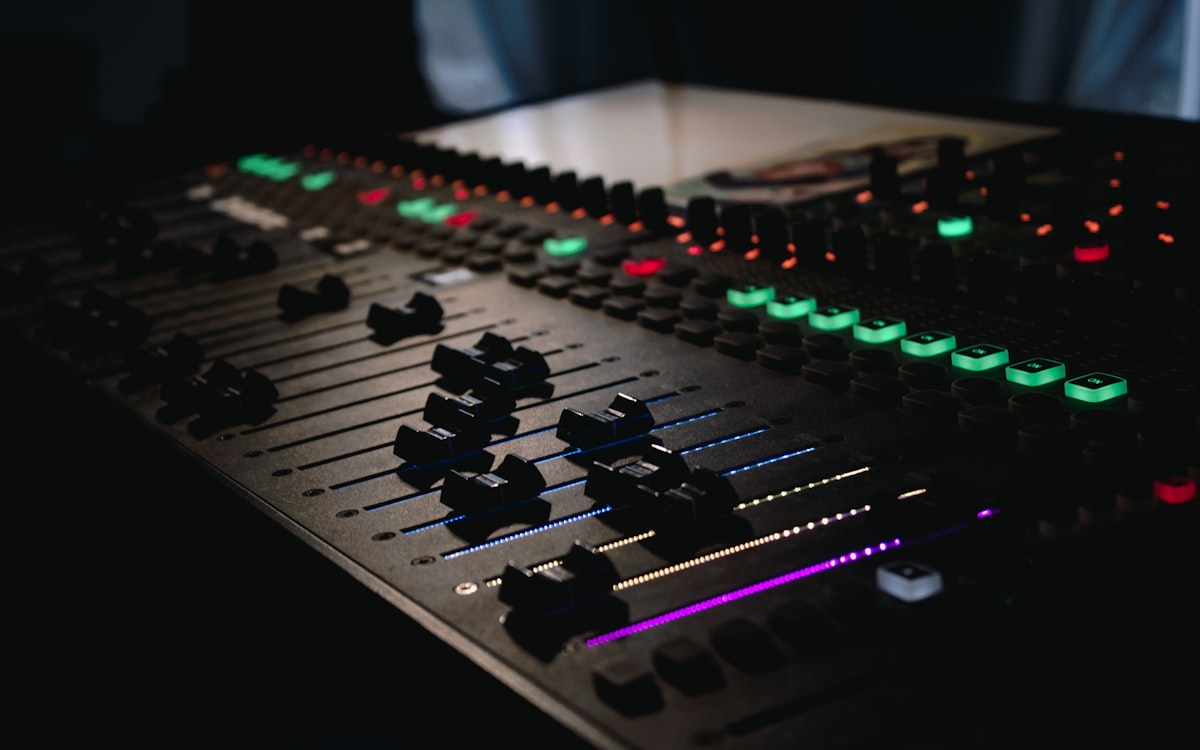
The Front of House engineer is responsible for everything the audience hears. On a typical show day, they:
- Set up and align the main PA system for the room's acoustics
- Work from the band's input list to patch and label every channel on the console
- Run the line check and soundcheck with the band
- Dial in EQ, compression, gates, and effects for each input
- Communicate with the monitor engineer throughout soundcheck
- Mix the show in real time, adjusting levels and processing as the performance evolves
- Manage any playback, timecode, or click track feeds from the stage
The FOH engineer lives and dies by the stage plot and input list. A clear, accurate stage plot tells them where everything is on stage; the input list tells them what plugs into each channel. Sending both documents before load-in is one of the most professional things a band can do.
What Is a FOH Mix?
The FOH mix is the combined output of all inputs — vocals, guitars, bass, drums, keys, playback tracks — processed and balanced for the audience's listening experience. It goes through the PA system (the main speakers hanging above or beside the stage) and subwoofers on the floor.
Unlike a studio mix, the FOH mix has to account for the room itself: reflections, absorption, audience noise, and the physical size of the space all affect how it sounds. That's why the FOH engineer needs to be positioned where they can actually hear the system — not stuck at the side of the room or behind a pillar.
FOH on Your Stage Plot and Input List
FOH appears on both documents you'll send in your tech rider:
- Stage plot — The FOH mix position (the engineer's console location) is sometimes marked as a reference point so the venue knows where cabling needs to run from the stage. Some stage plots also note FOH console preferences (e.g., "Avid SC48 preferred").
- Input list — FOH is the primary destination for every input channel. Many input lists include a column for FOH notes — channel name, mic or DI type, phantom power requirements — and a separate column showing which channels feed each monitor mix.
When you send a complete tech rider with a stage plot and input list, the FOH engineer can have the console patched and labelled before the band arrives for soundcheck. That's the entire point.
Quick FOH Checklist Before Soundcheck
- Send your latest stage plot and input list at least 48 hours before show day.
- Make sure stage positions and channel numbers match across both documents.
- Confirm monitor requirements (number of mixes, wedges vs IEMs) before load-in.
- Label all playback and click channels clearly to avoid patching errors.
- Designate one production contact so the FOH engineer has a single source of truth.
Frequently Asked Questions About FOH
What does FOH mean in music?
FOH stands for Front of House. It refers to the main PA mix the audience hears and the area in front of the stage where the FOH engineer's mixing console is set up.
What is the difference between FOH and monitors?
FOH is what the audience hears through the main PA. Monitors are separate mixes that the performers hear on stage through wedge speakers on the floor or in-ear monitors (IEMs). They are completely independent mixes, often sounding very different from each other.
What does a FOH engineer do?
The FOH engineer mixes the main PA system in real time during the show. They patch and set up all input channels using the band's input list, run soundcheck, and adjust levels, EQ, and effects throughout the performance to deliver the best possible sound to the audience.
Where is the FOH position at a concert?
Typically in the centre of the audience area, roughly a third of the way back from the stage. This placement gives the engineer an accurate representation of how the PA sounds throughout the room. At festivals, the FOH position is usually in a mix platform built into the crowd barrier.
Do I need to include FOH on my stage plot?
It's good practice to note your FOH console preference on your stage plot or rider — especially if you have a strong preference for a specific desk (DiGiCo, Avid, Yamaha). For most bands, the main stage plot and input list are what the FOH engineer needs most. Create a stage plot and input list to get started.
Reviewed July 2026 by The Hive Mind live production team. Images licensed via Unsplash.